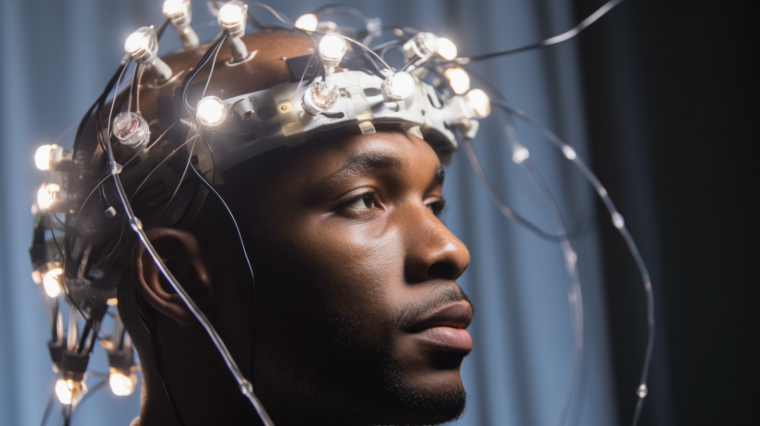
Is it possible to use cutting-edge technology to decode your dreams? This is the intriguing question that neurotech company Prophetic AI is striving to answer. Their mission? To make the complex world of dreams more accessible by harnessing the power of neuroscience and artificial intelligence.
Unleashing the Power of Dreams
Prophetic AI believes that our dreams hold profound insights about our lives and subconscious thoughts. To unlock these insights, they are in the process of developing a non-invasive neural device. This device aims to induce and stabilize lucid dreams, a state in which the dreamer is aware that they are dreaming while the dream is occurring.
Eric Wollberg, co-founder of Prophetic AI, envisions a future where everyone can access this prophetic wisdom that has historically been associated with figures such as Abraham, Mohammed, and Buddha. By doing so, he hopes to enable people to become their own prophets.
The Science Behind Lucid Dreaming
A study published by Frontiers in Psychology in June 2020 revealed that 50% of respondents experienced lucid dreaming. Wollberg, a self-professed lucid dreamer, has been planning Prophetic AI since 2018. He draws inspiration from the Axial Age, a period characterized by significant shifts in religious, philosophical, and metaphysical thought.
The firm’s Chief Technology Officer, Wesley Berry, has been involved in numerous neurotech projects, including the Neurosity crown used during a performance by AI enthusiast and musician Grimes at the Ultra Music Festival.
The Halo: A Technological Breakthrough
At the heart of Prophetic AI’s work is the Halo, a crown-shaped device designed to be worn on the head. The Halo utilizes ultrasound technology to target specific brain regions, offering a more precise approach than traditional electrode methods. The company plans to use generative AI to translate dream data, likening the AI to a medium that puts words to our dreams.
Prophetic AI plans to release the Halo headsets in late 2025 after completing testing with the Netherlands-based Donders Institute and the UK-based research center TTP Group. You can reserve a Halo for $100 on the Prophetic AI website, with the reservation fee being credited towards the final price of the device upon release.
While the concept of paying upfront for a device that is years away from release may not appeal to everyone, Wollberg explains that the reservation fees are held in escrow until the Halos are released. This strategy allows them to create an order book and partner with top-tier manufacturers.
As we anticipate the future of dream interpretation with Prophetic AI’s Halo, we can’t help but ponder the potential of other emerging technologies. Consider, for instance, the sophisticated analytics provided by platforms like cryptoview.io. Such applications provide valuable insights, not into our dreams, but into the equally complex world of cryptocurrencies.
Start now using our tools for free.Despite the promising benefits of lucid dreaming, including personal insight, nightmare resolution, and creative problem-solving, it’s important to proceed with caution. The Sleep Foundation warns against continuous lucid dreaming as it can disrupt sleep patterns and potentially impact mental health, particularly in individuals with PTSD and nightmares.
However, Prophetic AI remains steadfast in its mission. They aim to help people realize that they are part of a shared metaphysical journey, and that all consciousness contributes to this data. By decoding our dreams, they believe we can significantly accelerate consciousness research.